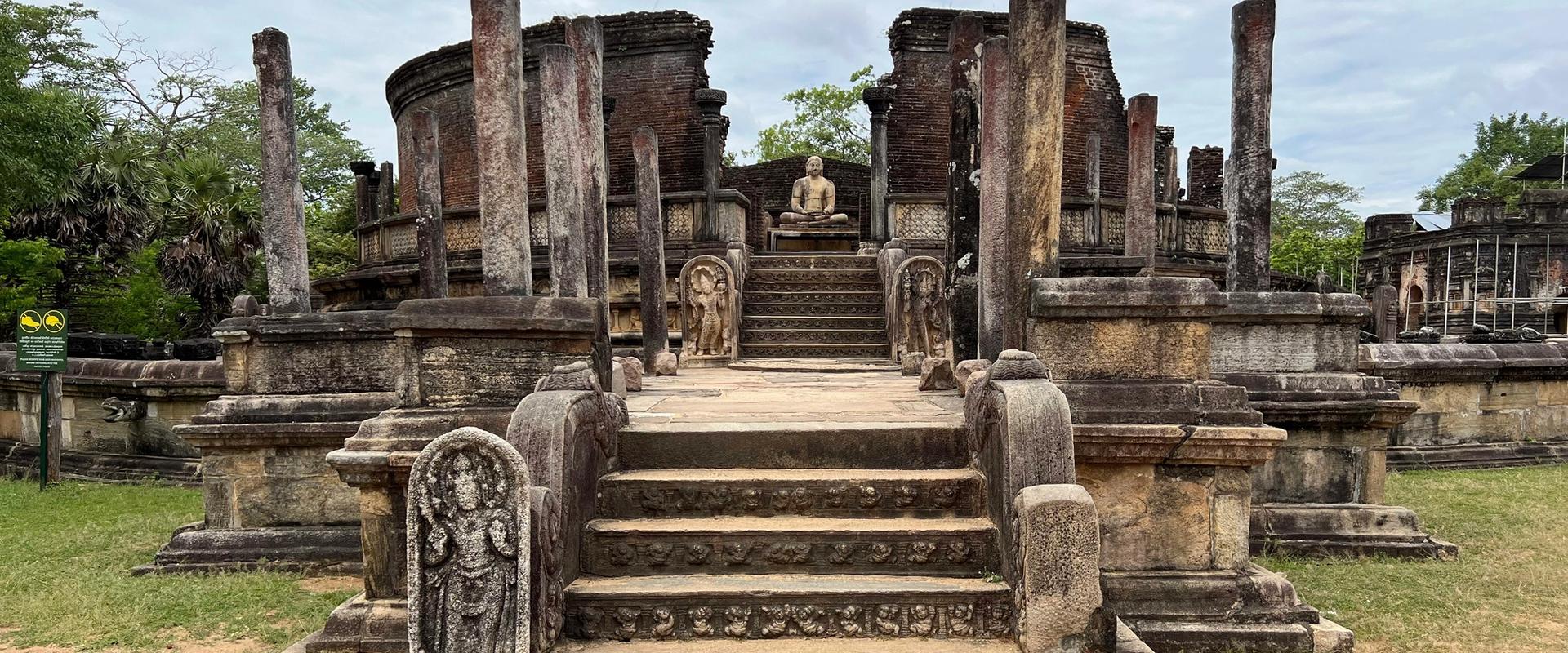
Polonnaruwa Ancient City
Sri Lanka's second ancient capital holds 12th-century ruins so well-preserved, you half expect the monks to return. Rent a bicycle and explore at your own pace.
Google Rating
1,426 reviews · Powered by Google
Best Time to Visit
May to September (dry season in the North Central Province)
Location
View on Google MapsPhoto Gallery
Sri Lanka's Forgotten Capital, Remarkably Intact
Polonnaruwa doesn't get the same tourist traffic as some of Sri Lanka's headline acts, which makes visiting it all the more satisfying. Serving as the island's second great capital between the 10th and 13th centuries, it was a city of palaces, irrigation systems, and Buddhist monuments that rivaled anything in medieval Asia. Today, its ruins are compact enough to cover in a day and well-preserved enough to feel genuinely connected to the civilization that built them — not just a scatter of crumbled stone in a field.
What to See Inside the Ancient City
The site is larger than it looks on a map, so hiring a bicycle at the entrance gate is the single best decision you'll make here. The flat, shaded paths between monuments are made for cycling, and the freedom to stop wherever you want — rather than following a guided convoy — transforms the experience.
The undisputed highlight is Gal Viharaya, a row of four Buddha figures carved directly into a single granite face. The seated Buddha is serene and precise; the enormous reclining figure, measuring 15 metres in length, is one of the most powerful pieces of religious sculpture in South Asia. Most visitors arrive, take photographs, and move on within ten minutes. If you sit quietly at the far end for a while, you'll understand why this place was considered sacred.
Rankot Viharaya is the largest stupa in Polonnaruwa and the fourth largest in Sri Lanka — a solid rust-red dome that you can walk around in about five minutes, taking in its sheer scale. Nearby, the Royal Palace ruins give you a clear sense of the ambition of King Parakramabahu I, who oversaw Polonnaruwa's golden age. The walls of his main audience hall still stand several storeys high.
At the edge of the ancient city, the Parakrama Samudra — literally the Sea of Parakrama — stretches across the horizon. This reservoir, built in the 12th century, covers 25 square kilometres and is still actively used for irrigation today. It's worth walking to the embankment at dusk, when the light drops and the water turns orange.
Practical Tips for Your Visit
Buy your ticket at the official Archaeological Museum entrance rather than from touts near the car park — the price is fixed and the ticket covers the entire ancient city. Arrive early, by 7am if you can, both to beat the heat and to have Gal Vihara largely to yourself before the tour groups arrive.
Polonnaruwa pairs naturally with the Dambulla Cave Temple, which is about an hour's drive away, making it easy to combine both in a single day if you're based between the two sites. Accommodation in Polonnaruwa town is modest but perfectly functional — most travelers use it as a one-night stop on the Cultural Triangle circuit.
Compared to Anuradhapura, Polonnaruwa feels more manageable and less overwhelming. It's a place where the history lands clearly, without requiring hours of cross-referencing a guidebook to make sense of what you're looking at.
Ready to Explore More of Sri Lanka?
Discover more incredible destinations and plan your perfect trip