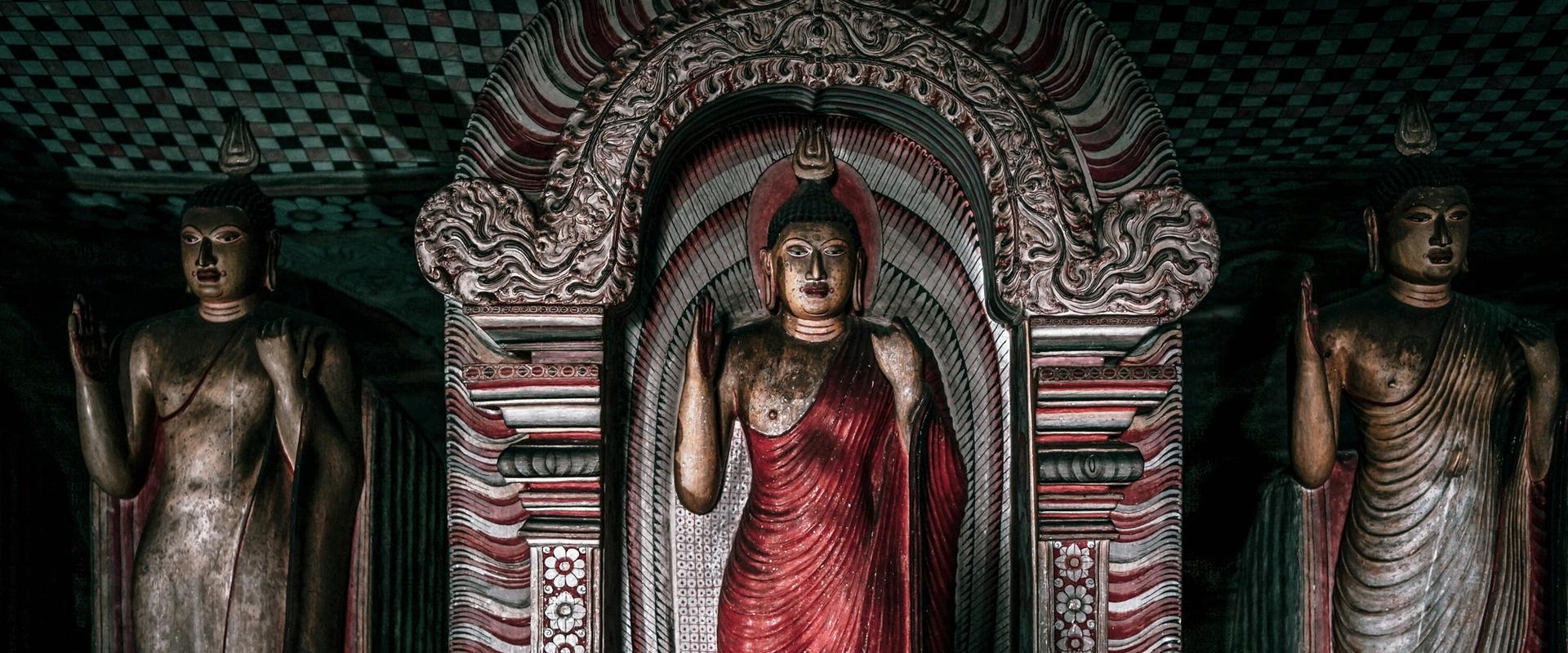
Dambulla Cave Temple
Climb into 2,000 years of history at Dambulla Cave Temple. Explore ancient murals, giant Buddha statues, and Sri Lanka’s most impressive cave shrine in one unforgettable visit.
Google Rating
17,061 reviews · Powered by Google
Best Time to Visit
December to April for dry weather in central Sri Lanka. Before 9 am or after 3 pm works best to beat the heat and crowds.
Location
View on Google MapsDambulla Cave Temple Travel Guide 2026
Sri Lanka’s Ancient Rock Temple You Can’t Miss
Situated in Sri Lanka’s Cultural Triangle (Anuradhapura, Polonnaruwa, Kandy), the Dambulla Cave Temple, also known as the Golden Temple of Dambulla, stands as the largest and best-preserved cave temple complex in Sri Lanka. UNESCO recognized it as a World Heritage Site in 1991. In 2026, it remains one of the country’s most visited religious landmarks.
You don’t just “see” this place. You climb to it. You step inside it. You stand inches away from statues and paintings that are over 2,000 years old.
Here’s what you need to know before you go.
Where It Is and Why It Matters
Dambulla sits in central Sri Lanka, about 2 hours from Kandy and 30 minutes from Sigiriya. The temple complex rises 160 meters above the surrounding plains. From the base, you climb a steady staircase up the rock.
At the top, five caves stretch along a massive overhanging rock face. Inside, you’ll find:
- •150+ Buddha statues
- •Murals covering over 2,100 square meters
- •Statues of Sri Lankan kings
- •Hindu deities mixed with Buddhist imagery
It’s not just a temple. It’s a timeline carved into stone.
Inside the Five Caves
Each cave has a name and personality. Walk slowly. Look up. The ceilings hold some of the most detailed Buddhist murals in Asia.
Cave 1: Devaraja Viharaya
This is the smallest cave, but it grabs your attention fast.
A 14-meter-long reclining Buddha carved directly from rock dominates the space. The statue dates back over 2,000 years. The calm expression sets the tone for the rest of your visit.
You’ll also see the Hindu god Vishnu. That mix of Buddhist and Hindu figures reflects Sri Lanka’s layered religious history.
Cave 2: Maharaja Viharaya
This is the largest and most impressive cave.
It holds over 50 Buddha statues, plus statues of Kings Valagamba and Nissanka Malla. The ceiling is completely covered in paintings. No blank spaces. Just patterns, lotus flowers, and scenes from the Buddha’s life.
Water drips from a crack in the ceiling into a small bowl. Locals consider it sacred. The drip continues even during dry seasons.
Stop for a moment here. Look around. It feels overwhelming in the best way.
Cave 3, 4, and 5
These caves are smaller but still rich with statues and paintings.
Cave 3, the Great New Monastery, contains colorful Kandyan-era murals from the 18th century.
Cave 4 and 5 display later additions and show how the site evolved through time rather than freezing in one historical moment.
Together, the five caves hold around 153 Buddha statues, 3 Sri Lankan kings, and 4 Hindu gods.
That density of sacred art in one place is rare.
Interesting Facts You Should Know
- •Dambulla is the largest preserved cave temple complex in Sri Lanka.
- •The murals cover over 2,100 square meters.
- •The site has been in continuous use since the 1st century BCE.
- •Monkeys roam the steps outside. Guard your snacks.
- •The Golden Buddha statue at the base of the complex stands 30 meters tall. It belongs to the newer Golden Temple complex below the caves.
The Golden Temple below the rock often confuses visitors. The massive golden statue is modern. The caves above are ancient.
You want the caves.
The Climb and What to Expect
You’ll climb about 350 steps to reach the entrance. It takes 10 to 20 minutes depending on your pace.
Go early. The sun hits hard by mid-morning. Wear comfortable shoes. Remove them before entering the caves.
You’ll leave your shoes at the entrance and pay a small fee to store them. Bring socks if the stone feels too hot.
The panoramic views from the top stretch across forests and plains. On a clear day, you can see Sigiriya Rock in the distance.
It feels peaceful up there. Despite the tourists, the space absorbs noise.
Best Time to Visit
Visit between January and April for the driest weather in central Sri Lanka. December also works well.
Arrive before 9 am or after 3 pm to avoid peak heat and tour buses.
In 2025, visitor traffic increased during European winter months due to strong demand from Germany, the UK, and France. Plan around that if you travel during high season.
The temple opens daily, usually from 7 am to 7 pm.
Travel Tips for 2026
Here’s what will make your visit smoother.
Dress Code
This is an active religious site. Cover your shoulders and knees. Remove hats and shoes before going inside.
Ticket Information
Buy tickets at the base before climbing. As of 2025, foreign adult tickets typically cost around $10. Prices change, so check official sources before visiting.
Combine with Other Sites
Most travelers pair Dambulla with:
- •Sigiriya
- •Anuradhapura
- •Polonnaruwa
- •Minneriya National Park
That loop forms the Cultural Triangle. You can cover it in 3 to 4 days.
The History of Dambulla Cave Temple
From Refuge to Royal Shrine
The story starts in the 1st century BCE.
King Valagamba of Anuradhapura lost his throne during an invasion. He hid in these caves for 14 years. When he regained power, he returned and transformed the caves into a temple to honor the monks who sheltered him.
Over centuries, other kings expanded and restored the complex. The Kandyan kings in the 17th and 18th centuries added many of the murals you see today.
You’re not looking at one era. You’re looking at layers of history.
UNESCO Recognition
In 1991, UNESCO listed the temple as a World Heritage Site for its:
- •Outstanding mural paintings
- •Monumental Buddha statues
- •Continuous religious use for over 2,000 years
Monks still worship here. This is not a museum. It’s a living temple.
FAQ
1. How long do you need at Dambulla Cave Temple?
Plan 1.5 to 2 hours. That gives you time to climb, explore all five caves, and enjoy the view.
2. Is Dambulla suitable for children?
Yes, but the climb is steep. Bring water and take breaks.
3. Can you take photos inside?
Yes, but no flash photography. Follow posted rules.
4. Is the Golden Buddha part of the ancient temple?
No. The large golden statue at the base belongs to the modern Golden Temple complex.
5. Do you need a guide?
You don’t need one, but a knowledgeable local guide adds context to the murals and statues.
6. Is it worth visiting if you already saw Sigiriya?
Yes. Sigiriya focuses on royal power and engineering. Dambulla focuses on religion and art. They complement each other.
Top Sources
Ready to Explore More of Sri Lanka?
Discover more incredible destinations and plan your perfect trip