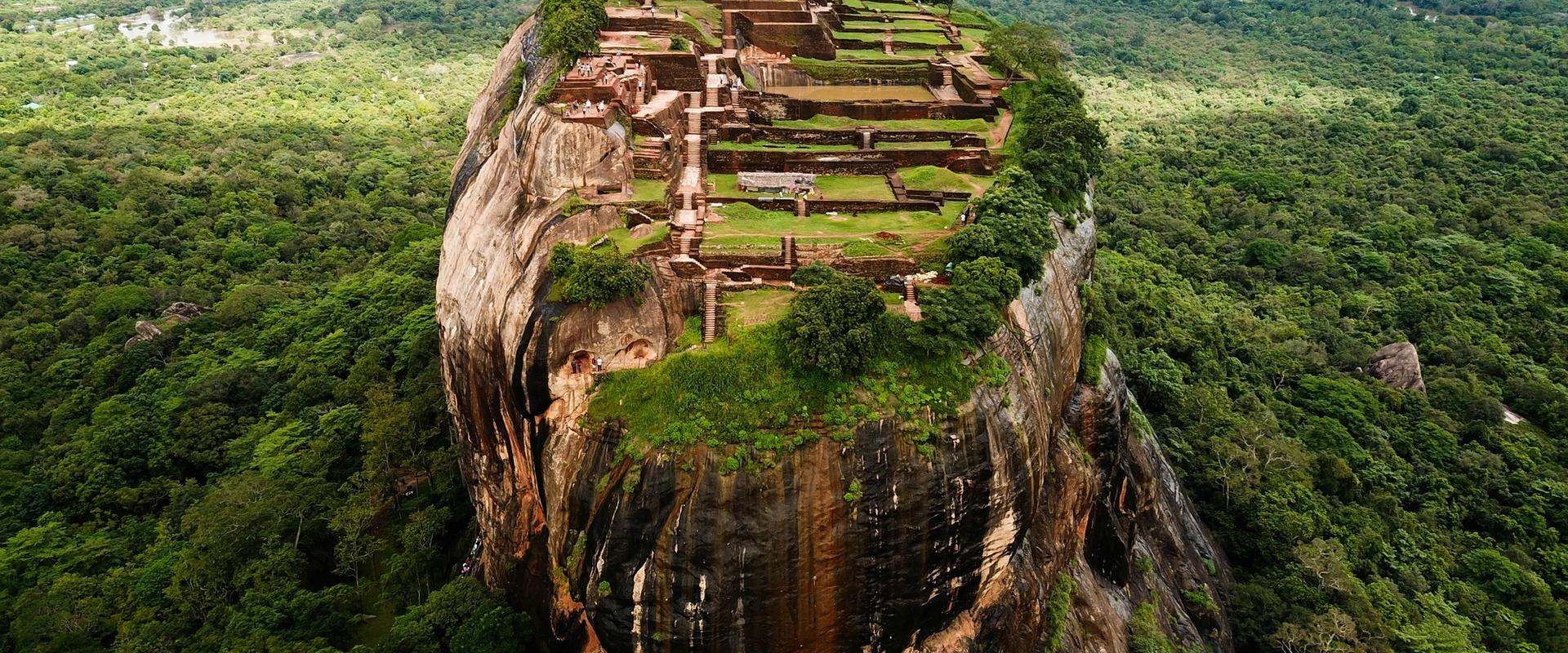
Sigiriya
Sigiriya is an ancient rock fortress, palace, and city complex in central Sri Lanka. It’s often called Lion Rock because the final climb begins through the giant stone paws of a lion entrance.
Google Rating
24,369 reviews · Powered by Google
Best Time to Visit
December to March. Early morning (6-8 AM) to avoid heat
Location
View on Google MapsSigiriya Travel Guide 2026
What Is Sigiriya?
Sigiriya is an ancient rock fortress, palace, and city complex in central Sri Lanka. It’s often called Lion Rock because the final climb begins through the giant stone paws of a lion entrance. The site sits on a massive granite monolith rising about 600 feet (180 m) above the wilderness. The views from the top and the surrounding grounds are truly unforgettable.
UNESCO listed it as a World Heritage Site in 1982 because of its mix of landscape architecture, water gardens, engineering brilliance, frescoes, and historical importance.
You’ll find Sigiriya in the Cultural Triangle (Anuradhapura, Polonnaruwa, Kandy) of Sri Lanka, a region rich with ancient capitals, stupas, and temples. This makes your visit part of a bigger historical journey through the island’s past.
What You’ll See and Do
The Rock Fortress Climb
This is the main reason most people come:
- •1,000+ steps lead up through the ancient gardens, Mirror Wall, and fresco galleries.
- •On the way up, you’ll see the famous ancient frescoes — color paintings of maidens and royal figures.
- •Mid-climb, pause at the Lion’s Paw Terrace — that’s where you enter through stone lion paws carved into the rock.
- •The summit offers a 360° panorama of central Sri Lanka’s plains, forests, and distant hills.
Be ready for heat, uneven steps, and strong winds up high.
Water Gardens and Engineering
The palace city below had an advanced hydraulic water system with fountains, ponds, dams, and canals that still function after fifteen centuries.
Nearby Cultural Sites
- •Pidurangala Rock: A quieter climb with excellent sunrise views and a clear outlook on Sigiriya.
- •Dambulla Cave Temple: A short drive away, this UNESCO site features ancient Buddhist murals and Buddha statues.
- •Minneriya National Park: See hundreds of elephants gathering around a reservoir in the dry season.
Practical Travel Tips
When to Visit
- •Best months: December to March for dry weather and clearer skies.
- •Morning start: Arrive by opening time (often 7 AM) to beat crowds and heat.
Tickets and Hours
- •Open daily, typically 7:00 AM – 5:30 PM with last entry around 5:00 PM.
- •Foreign adult tickets are around USD 35 (often bundled with the Sigiriya Museum).
How to Reach Sigiriya
- •From Colombo: About 180 km (4–5 hours by car).
- •Bus: Regular buses from Dambulla (~40 minutes, low cost).
- •Tuk-tuk: Easily arranged locally.
Roads are generally good, but wild elephants can sometimes wander near roads at dusk around Sigiriya, so stay alert if you’re traveling around 6 PM or later.
Climbing Tips
- •Wear good walking shoes — steps can be steep and uneven.
- •Bring water, sunscreen, a hat, and layers for changing weather.
- •Photography isn’t allowed at some fresco points; watch for signs.
Safety Notes
- •Wasps and bees can be found near shaded rock faces; proceed carefully.
- •If you’re not confident with heights, consider going up only partway and exploring the gardens and water features.
Interesting Facts That Few People Know
- •Sigiriya’s Mirror Wall once reflected like a polished mirror and now holds over 700 pieces of ancient graffiti from visitors dated from the 8th to 18th centuries.
- •Its water gardens are among the oldest surviving landscaped gardens in the world.
- •Local village crafts — batik fabrics, handloom textiles, and pottery — connect you to Sri Lankan traditions beyond the fortress.
The Story Behind the Rock
King Kashyapa and a Palace in the Sky
In 477 CE, King Kashyapa I chose Sigiriya as his capital. He built a palace on the rock’s flat summit to defend himself after seizing the throne from his father. The site blends fortress strength with high art and garden planning.
Kashyapa died in 495 CE, but the palace’s legacy endured. In the centuries that followed, Sigiriya became a Buddhist monastery until around the 13th century.
Early History Before Kashyapa
Before Kashyapa, Sigiriya was already a sacred place. Monks lived and meditated in natural caves here as early as the 3rd century BCE, long before the great fortress was built.
Rediscovery and Archaeology
The site was always known locally, but systematic archaeological work began around 1898 under British archaeologist H.C.P. Bell. That work helped uncover the palace foundations, water gardens, frescoes, and mirror wall — giving us the Sigiriya we see today.
Sigiriya Today: A Living Destination
A Welcoming City in 2026
Sigiriya was named the World’s Most Welcoming City for 2025 based on over 360 million traveler reviews on Booking.com. That recognition highlights not just the ancient monument, but the hospitality of local guides, guesthouses, cooks, and craft makers around town.
Sustainable Tourism Leader
In 2025, Sri Lanka declared Sigiriya its first certified Sustainable Tourism Destination. That means local businesses, conservation groups, and government agencies are working together to protect nature, cultural sites, and community wellbeing.
Expert Chinthana Duminduhewa (founding chairman of sustainable tourism initiatives) said that training local entrepreneurs in sustainability helps preserve the site and improves visitor experiences.
FAQ
1. How long does it take to climb Sigiriya?
Expect about 1–2 hours round trip depending on your pace and how long you linger at viewpoints.
2. Is Sigiriya worth visiting in the rain?
Yes. Even during monsoon periods, mornings are usually clear. Just bring rain gear and plan for mud and slippery steps.
3. Can you visit Sigiriya and other sites in one day?
You can, but it can be rushed. Pair it with nearby Dambulla or Pidurangala with careful planning.
4. Is it safe for solo travelers?
Sigiriya is popular and well-managed. Use common sense with valuables, water, and heat.
5. What’s the best way to explore the surrounding area?
Rent a tuk-tuk or a bicycle to see rural villages, lakes, and rice paddies. Ask your guesthouse for trusted local drivers. Watch out for wildlife.
Quick External Links for Planning
- •UNESCO World Heritage overview: https://whc.unesco.org
- •Sri Lanka Tourism official info: https://www.tourismsrilanka.org
- •https://www.holidify.com/places/sigiriya/
Sources
- •Britannica – Sigiriya
- •Sigiriya Official Site
- •Holidify – Sigiriya Travel Guide
- •Newswire Sri Lanka – Sigiriya Most Welcoming City 2025
- •Ceylon Today – Sigiriya Sustainable Tourism
- •Global Sustainable Tourism Council – Sri Lanka Site Goes Green
- •Global Housing Sri Lanka – Sigiriya Visitor Stats
- •Reddit – Wildlife Near Sigiriya
- •Reddit – Visiting Sigiriya in Rain
- •Reddit – Sigiriya Day Trip
Ready to Explore More of Sri Lanka?
Discover more incredible destinations and plan your perfect trip