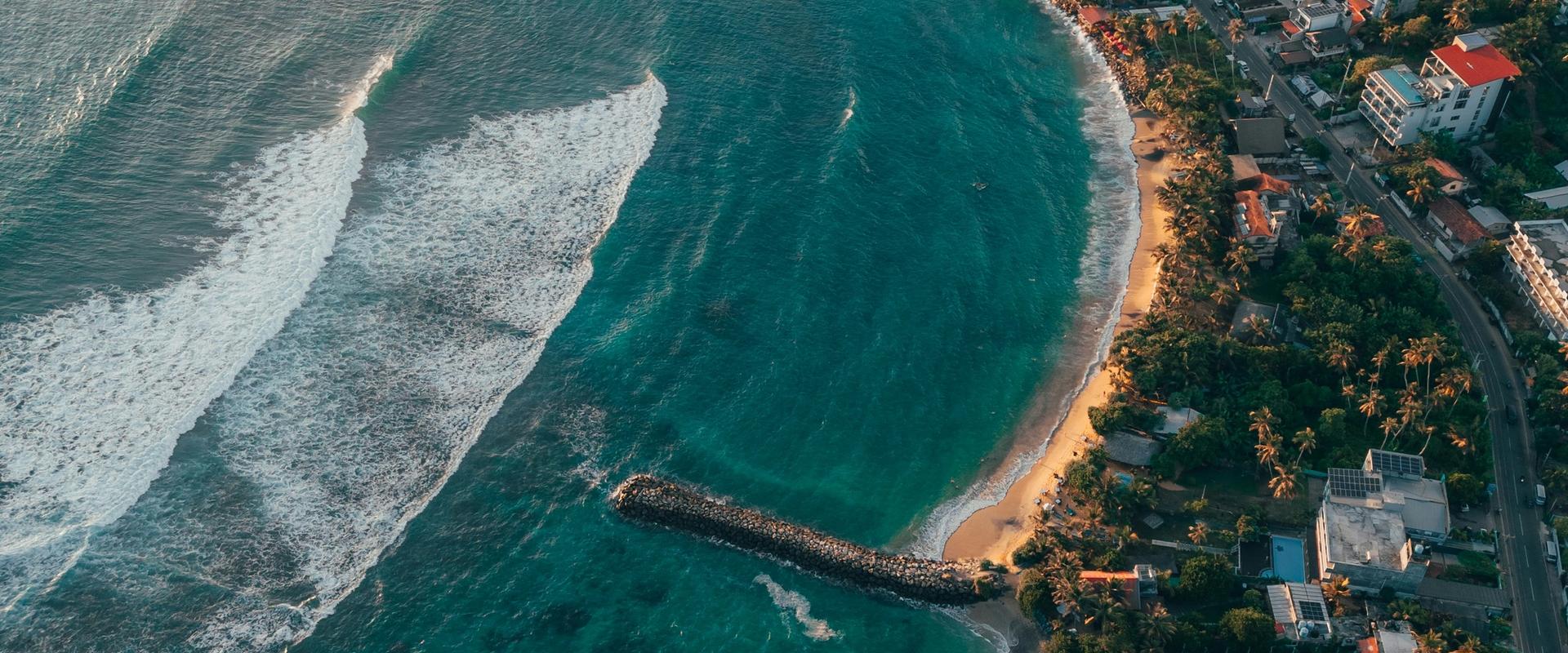
Mirissa
Golden beaches, blue whales, surf breaks, and real travel tips. Here’s exactly how to plan your perfect Mirissa trip in 2026.
Best Time to Visit
December to April for dry, sunny weather.
Location
View on Google MapsMirissa Travel Guide: What to See, Do, and Know Before You Go
Mirissa sits on Sri Lanka’s southern coast, about a 3 hour drive from Colombo, and about an hour drive from Galle. It looks small on a map. It feels bigger once you arrive.
You get palm trees, a curved golden beach, fishing boats at sunrise, and some of the best whale watching in the Indian Ocean. You also get crowds in peak season. This guide tells you what’s worth your time, what’s overhyped, and how to plan your trip smartly in 2026.
Why Visit Mirissa in 2026?
Mirissa benefits from three things:
- •Reliable surf in season
- •High whale sighting rates
- •Easy access from Colombo via the Southern Expressway
If you want beach + wildlife without flying to another island, Mirissa delivers.
The Vibe
Mirissa is not a quiet fishing village anymore. It’s lively from December to March. Cafés open early. Music plays at night. Digital nomads sit with laptops. Backpackers mix with families and couples.
If you want silence, stay slightly outside town. If you want action, book near Mirissa Beach.
Beaches in Mirissa
Mirissa Beach
This is the main beach. You get soft sand, gentle waves during calm months, and sunset views that actually look like the photos.
Swim when the sea is calmer. Watch for strong currents during rough conditions. Lifeguards are not always present.
You’ll find beachfront restaurants serving fresh seafood and Sri Lankan rice and curry. Prices increased slightly in 2025 due to higher tourism demand, but meals still cost less than most European beach towns.
Secret Beach
Secret Beach sits a short tuk tuk ride away. It used to feel hidden. It’s not a secret anymore. Still, it’s smaller and quieter than the main strip.
Go early. By midday, it fills up.
Coconut Tree Hill
You’ve seen it on Instagram. That row of coconut trees on a red clay cliff above the ocean. That’s Coconut Tree Hill.
Walk carefully. There are no barriers. Go at sunset for better light and fewer harsh shadows. It can get really hot during mid-day.
Whale Watching in Mirissa
This is the big one.
Mirissa is one of the best places in the world to see blue whales in their natural habitat.
What You’ll See
Between November and April, boats head into the Indian Ocean searching for:
- •Blue whales
- •Sperm whales
- •Bryde’s whales
- •Spinner dolphins
Sightings are frequent during peak months. The Indian Ocean off Sri Lanka hosts one of the largest populations of blue whales globally.
That makes Mirissa globally significant, not just locally popular.
What You Should Know
Not all operators follow best practices. Choose licensed companies that limit boat numbers and respect distance guidelines.
Ask:
- •How many boats do you send per whale?
- •Do you follow government regulations?
- •What is your cancellation policy?
Morning tours usually leave around 6:00 am and last 3 to 5 hours. The ocean can get rough. Take motion sickness tablets if you need them.
Surfing and Water Activities
Mirissa offers beginner to intermediate surfing.
If you want bigger, more consistent waves, head west toward Weligama or east toward Hiriketiya.
Mirissa works best when:
- •Swell is moderate
- •Wind stays low
- •You surf early morning
You can rent boards directly on the beach. Prices are reasonable. Negotiate politely if you rent for multiple days.
Snorkeling is possible near calmer rocky areas. Visibility is best during the dry season (November to April), when the water is calmer and clearer. During monsoon months, sediment and choppier conditions make it much less worthwhile. Mornings generally offer the best visibility before currents pick up.
If snorkeling is a priority, Unawatuna (about 30 minutes west) and the Rumassala area near Galle have more established reef systems.
Food Scene in 2026
Mirissa’s food scene is vibrant. You can get:
- •Sri Lankan rice and curry
- •Sri Lankan street foods (like Kottu Roti)
- •Fresh grilled tuna and prawns
- •Smoothie bowls
- •Good coffee
- •Vegan and vegetarian options
Prices increased slightly in 2025 due to inflation and tourism recovery, but you still eat well for a fair cost.
If you want a bigger selection of cafés and international restaurants, drive 10 minutes to Weligama.
Interesting Facts About Mirissa
- •You can see the largest animal on Earth, the blue whale, just offshore.
- •Mirissa stays hot year round, with average temperatures between 26 and 30 degrees Celsius.
- •Peak tourist season runs December through March.
Mirissa is near one of the world’s busiest east-west shipping routes.
Getting to Mirissa
From Colombo
- •Private taxi: 2.5 to 3 hours
- •Train: about 3.5 hours but offers better views
- •Direct bus from Colombo to Matara, then tuk tuk
Driving via the Southern Expressway is the fastest and easiest option.
Where to Stay
Mirissa offers:
- •Budget guesthouses
- •Mid range boutique hotels
- •Luxury villas
If you want quiet nights, avoid properties directly on the main beach strip. Music plays late during peak season.
If you want convenience, stay walking distance from the beach. Tuk tuks add up.
Book early for January and February. Those months fill fast.
Travel Tips for 2026
You want practical advice. Here it is.
Best Time to Visit
December to March offers calmer seas and better whale watching conditions.
Avoid May to September if you want ideal beach weather. The southwest monsoon brings rough seas and rain.
Money
Cash still matters. ATMs exist but can run out during peak season. Carry backup.
Safety
Mirissa is generally safe. Use common sense. Don’t leave valuables unattended on the beach.
Health
The sun is strong. Use high SPF sunscreen. Stay hydrated.
The ocean can have strong currents. Swim where locals swim.
Internet
Wi Fi works well in most hotels and cafés. Digital nomads base themselves here comfortably.
A Quick History of Mirissa
Mirissa started as a fishing village on Sri Lanka’s southern coast. For centuries, local families relied on fishing and coconut farming.
The broader region falls under the historical influence of the Galle district, which saw Portuguese, Dutch, and British colonial control between the 16th and 20th centuries.
After Sri Lanka’s civil war ended in 2009, southern coastal towns experienced rapid tourism growth. Mirissa transformed quickly between 2012 and 2019. The 2020 pandemic paused growth. Recovery accelerated again by 2023.
Today, tourism drives much of the local economy, alongside traditional fishing.
FAQ
1. Is Mirissa worth visiting in 2026?
Yes. It offers beaches, whale watching, and good infrastructure. Tourism services have improved since 2023.
2. When is whale watching season in Mirissa?
November through April. January and February offer strong sighting rates.
3. How many days do you need in Mirissa?
Two to three days works well. Stay longer if you want to surf or slow travel.
4. Is Mirissa expensive?
It costs more than smaller inland towns but still less than many global beach destinations. Budget travelers can manage easily.
5. Can you swim safely in Mirissa?
Yes, during calm months. Watch for currents. Avoid rough sea days. Talk to locals.
6. Is Mirissa good for families?
Yes. Choose calm months and family friendly hotels.
Top Sources
Ready to Explore More of Sri Lanka?
Discover more incredible destinations and plan your perfect trip