Kandy
Kandy blends sacred temples, royal history, misty hills, and living culture. Here’s your complete 2026 guide to Sri Lanka’s spiritual capital.
Best Time to Visit
Best months: December to April. Less rain. Clearer skies. July and August for festivals.
Location
View on Google MapsKandy, Sri Lanka: The Cultural Heart of the Hill Country (2026 Guide)
Kandy sits in the hills of central Sri Lanka, wrapped in mist, history, and temple drums. You feel it the moment you arrive. The air cools. The traffic slows. The lake appears. This city doesn’t shout. It holds its ground.
If you’re planning a trip in 2026, here’s what you need to know.
Why Visit Kandy in 2026
Kandy remains Sri Lanka’s cultural capital. UNESCO listed it as a World Heritage Site in 1988. It was the last royal capital before the British took control in 1815.
You don’t come to Kandy for beaches. You come for heritage, religion, and mountain views.
The Temple of the Sacred Tooth Relic
Why It Matters
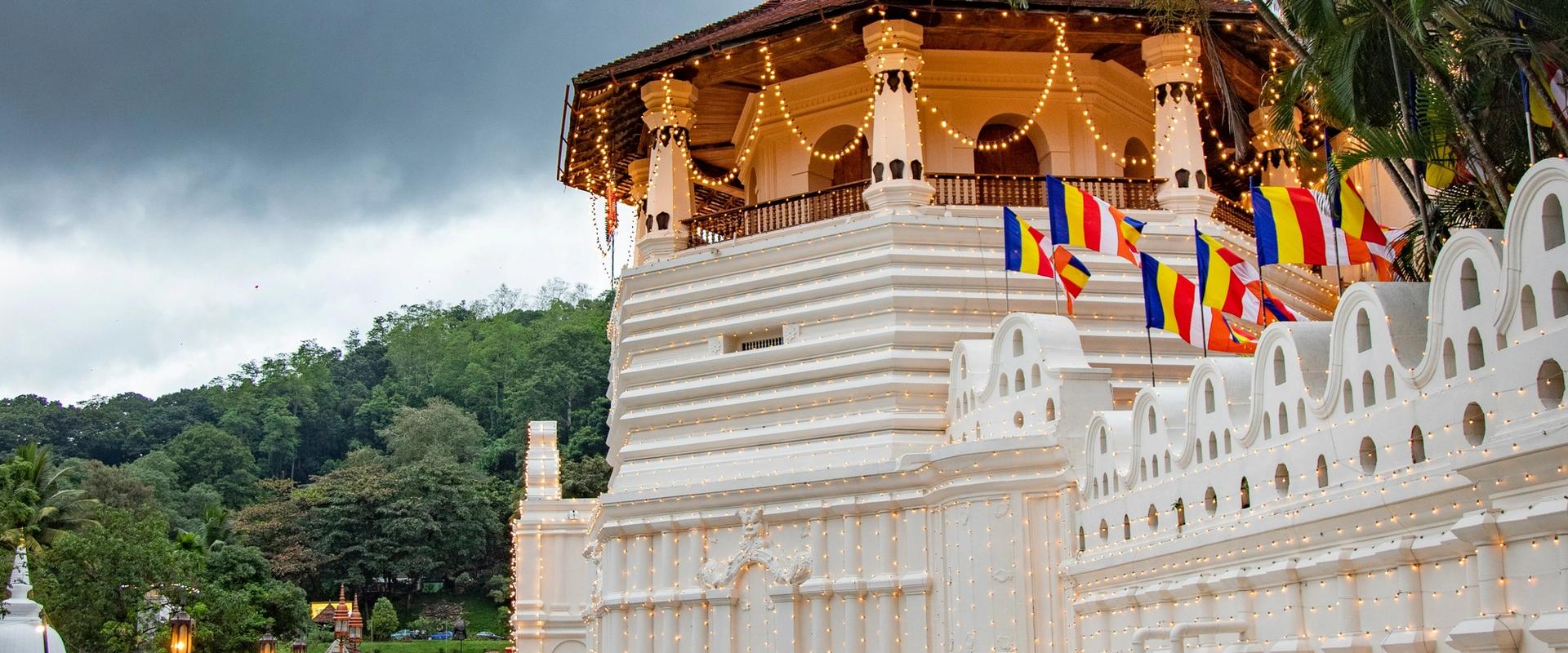
At the center of Kandy stands the Temple of the Sacred Tooth Relic, known locally as Sri Dalada Maligawa.
The Temple of the Sacred Tooth Relic houses what Buddhists believe is a tooth of the Lord Buddha himself. This relic makes Kandy one of the most important Buddhist pilgrimage sites in the world.
Three daily ceremonies happen at dawn, midday, and evening. Drummers play. Monks chant. Devotees line up with lotus flowers. You won’t see the relic itself. It stays inside a golden casket. But the energy in the room is real.
Dress properly. Cover your shoulders and knees. Remove your shoes and hats. Arrive early to avoid long lines.
The Kandy Esala Perahera
If you visit in August, you’ll witness one of Asia’s largest religious festivals: the Kandy Esala Perahera.
Elephants in ceremonial dress walk through the streets. Traditional dancers spin and flip. Fire performers move through the crowds. The city shuts down for ten nights.
Kandy Lake and the City Center
A Walk Around the Lake
Kandy Lake sits right next to the temple. King Sri Wickrama Rajasinghe built it in 1807.
Walk the full loop. It takes about an hour. You’ll pass white walls, shady trees, and views of the temple complex. Go early in the morning or just before sunset. Midday heat hits hard.
Markets and Everyday Life
Step into Kandy Municipal Market. You’ll see jackfruit, spices, dried fish, and bright flowers. This is daily Sri Lankan life, not a tourist show.
If you want a local snack, grab a vegetable roti or a cup of strong Ceylon tea. Keep it simple.
Royal History and Colonial Layers
The Last Kingdom
Kandy stood as the final independent Sinhalese kingdom until the British signed the Kandyan Convention in 1815.
The Kandyan Convention ended more than 2,000 years of local monarchy.
Visit the International Buddhist Museum inside the former royal palace complex. You’ll learn how Buddhism spread from Sri Lanka to countries like Thailand, Myanmar, and Japan.
Colonial Architecture
Walk uphill to St. Paul's Church, built in 1843. It stands across from the temple. British colonial influence sits right beside ancient Sinhalese tradition. That contrast defines Kandy.
Nature Around Kandy
Udawattakele Forest Reserve
Udawattakele Forest Reserve lies just behind the temple. This protected forest once served as a royal garden.
You’ll find monkeys, birds, and quiet walking trails. Wear proper shoes. Bring water. Stay on marked paths.
Knuckles Mountain Range
Two hours away sits the Knuckles Mountain Range. Hikers love it. UNESCO lists it as a World Heritage conservation area.
Guided treks range from one-day walks to multi-day hikes. Go with a licensed guide if you’re new to hiking. Weather changes fast in the mountains.
Tea, Gardens, and Hill Country Views
Kandy connects you to Sri Lanka’s tea story.
Visit the Ceylon Tea Museum in Hanthana. You’ll learn how British planters developed the tea industry in the 19th century after coffee crops failed.
Sri Lanka produced over 250 million kilograms of tea in 2024. Tea remains one of the country’s top export earners in 2025.
You can also visit the Royal Botanic Gardens in Peradeniya. Orchids. Palm avenues. Bamboo groves. It’s clean, organized, and worth your time.
Food in Kandy
You won’t find fine dining everywhere. You’ll find rice and curry. That’s enough.
Try:
- •Rice and curry with 4 to 6 vegetable sides
- •Kottu roti chopped with egg or chicken
- •String hoppers with coconut sambol
- •Fresh king coconut on the street
Eat where locals eat. If a place looks busy at lunch, that’s your sign.
Getting There and Around
You can reach Kandy from Colombo in about 3 hours by train or car. The train ride ranks among the most scenic in the world.
Colombo to Kandy trains fill up fast. Book early.
Inside the city, use tuk-tuks. Agree on a price before you start. Or use ride apps available in 2026 like PickMe or Uber.
Travel Tips for Kandy
When to Visit
Best months: December to April. Less rain. Clearer skies.
July and August bring festival crowds.
What to Wear
Light clothes. Comfortable shoes. Modest attire for temples.
Money
Carry small bills. Many local shops still prefer cash.
Respect
Remove shoes at temples. Ask before photographing monks.
FAQs About Kandy
1. How many days do you need in Kandy?
Stay two nights. That gives you one full day for the temple and city, and another for gardens or nearby hikes.
2. Is Kandy worth visiting compared to Ella?
Yes. Kandy gives you history and religion. Ella gives you scenery and hiking. Visit both.
3. Can you see the Tooth Relic?
No. You see the golden casket during ceremony hours.
4. Is Kandy crowded?
It gets busy near the temple and during festivals. Mornings stay calmer.
5. Is it easy to travel from Kandy to Sigiriya?
Yes. It takes about 2.5 hours by car. Many travelers combine both.
6. Do you need a guide?
For the temple, no. For deeper historical context or mountain trekking, hire a licensed guide.
Top Sources
Ready to Explore More of Sri Lanka?
Discover more incredible destinations and plan your perfect trip